(678) 985-9800 Schedule An Inspection
Home  ›  Case Studies  ›  A Fixer-Upper Failing From Roof to Foundation
1920s Home · Atlanta, GA · Buyer's Inspection

A fixer-upper that was failing — from the roof to the foundation.

This early-1920s Atlanta home had never been meaningfully updated. The peeling paint and old windows looked like a cosmetic project — until we got underneath it.

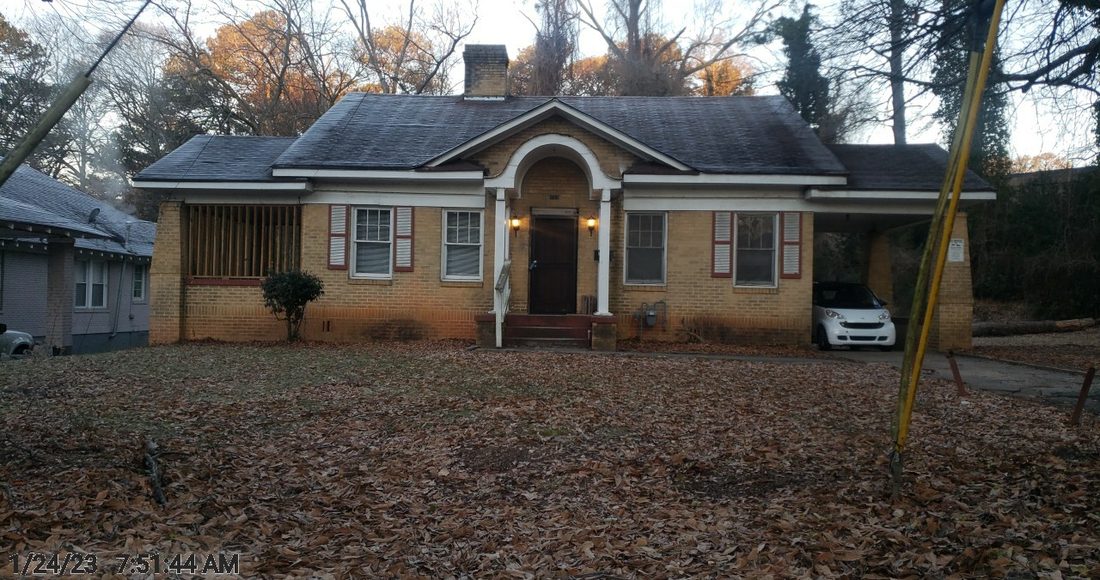
Front exterior of the original 1920s brick bungalow, unrenovated
1920s
Era of the home
Original
Never meaningfully renovated
Buyer's
Pre-purchase inspection
89
Repair-level findings — in all 11 systems
The Situation

A 1920s house, never really touched

The home was close to a hundred years old and had never been meaningfully updated — original wiring, original roof framing, original everything. Our client was buying, and on a walk-through the problems read as cosmetic and about what you'd expect for a house this age: peeling paint, windows painted shut, floors that sloped a little. The kind of thing you shrug off as old-house character.

Going in, the plan was the plan for any fixer: budget for paint, windows, and floors, and call it a project. The real question was whether the bones underneath were sound enough to build on.

Then we opened the crawlspace, the attic, and the electrical panel — and the cosmetics turned out to be the least of it.

What We Found

The problems you could see weren't the ones that mattered.

Seven findings from an 89-item report, in the order that tells the story — starting under the floor and ending with the water that drove most of it.

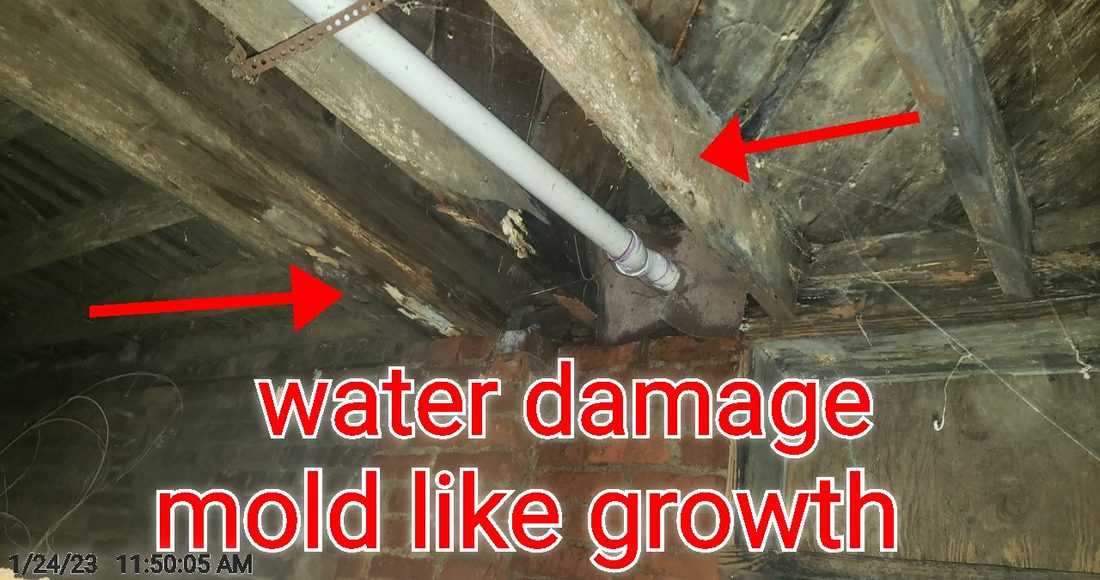
Water-damaged floor framing and subfloor in the crawlspace, with mold-like growth
Finding 01 · Structure

Significant water damage to the subfloor and framing

What it is

Long-term moisture in the crawlspace had water-damaged the subflooring below both the bathrooms and the kitchen, along with the floor framing underneath. The main carrying beam was water-damaged badly enough that the report calls for replacement, and the rim joists and sill plates — the framing the whole house sits on — were water-damaged on both sides of the home.

Why it matters

This is the floor structure of the house quietly rotting from below — the part you stand on, can't see, and can't paint over. It's the single biggest structural issue in the home, it doesn't stop on its own, and it's why the floors didn't feel right underfoot.

Ballpark: $15,000 – $30,000
Illustrative range — replace water-damaged subfloor and framing, replace the main beam, and stop the moisture source, by a licensed framing contractor. Not a quote.
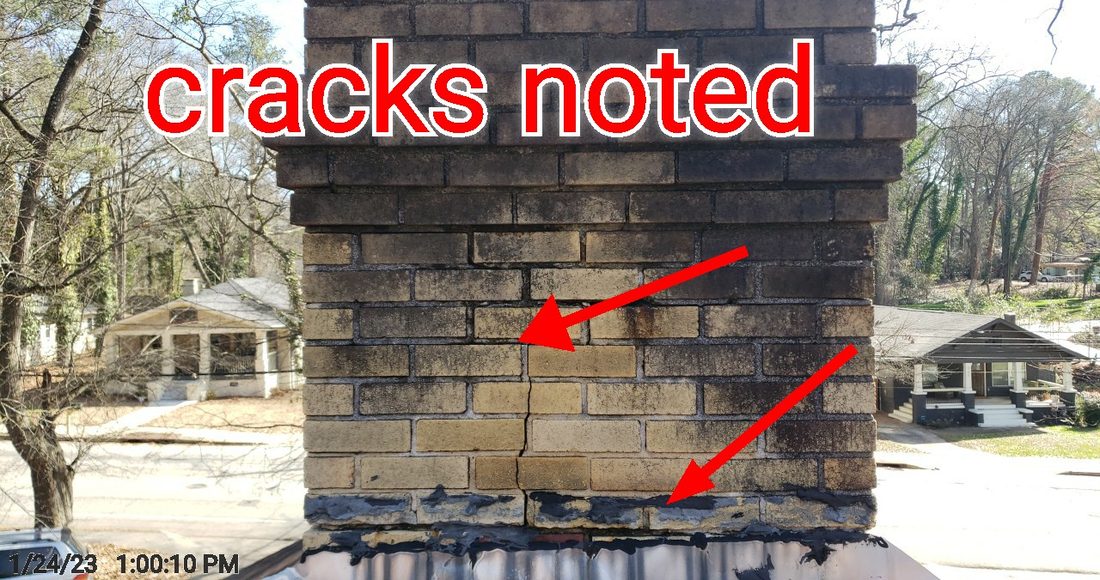
Cracks noted running through the masonry chimney
Finding 02 · Structure

The chimney was pulling away from the house

What it is

The masonry chimney had rotated at the roofline, with horizontal cracks running along where it meets the roof — what the report flags as a sign of structural failure. The mortar joints were also deteriorated, and there was no cap or spark arrestor.

Why it matters

A separating chimney is both a collapse risk and a direct path for water into the house, and it makes the fireplace unsafe to use until it's addressed. On an original masonry stack this age, it's rarely a small fix.

Ballpark: $10,000 – $25,000
Illustrative range — stabilize or rebuild the masonry stack and reflash at the roofline, by a chimney/masonry specialist. Not a quote.
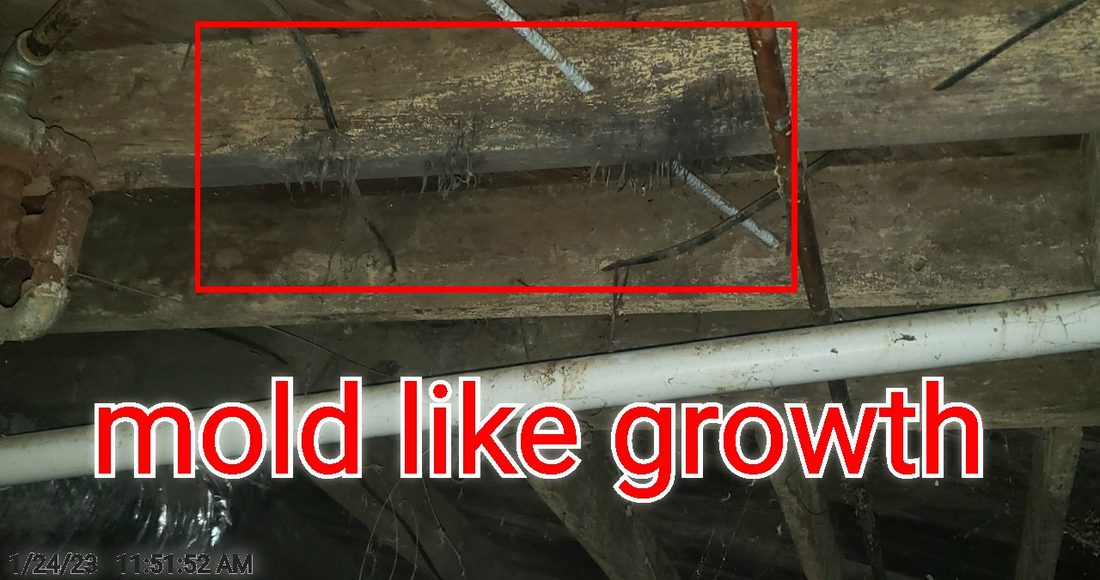
Mold-like growth on the wood floor framing in the crawlspace
Finding 03 · Moisture

Active water and mold-like growth under the house

What it is

The crawlspace showed active water penetration with efflorescence on the foundation walls and no vapor barrier over the dirt floor. Mold-like growth had taken hold on the wood framing in the crawlspace and below the kitchen and bath sinks.

Why it matters

This is an air-quality concern sitting on top of the moisture that's driving the damage elsewhere on this page. It's also exactly why an independent inspector matters: we test and document, we don't remediate — so there's no incentive to over- or under-call it. Mold-like growth should be confirmed by independent testing before anyone decides how to handle it.

Ballpark: $3,000 – $10,000+
Illustrative range — independent testing, remediation, and a vapor barrier / crawlspace encapsulation. Not a quote.
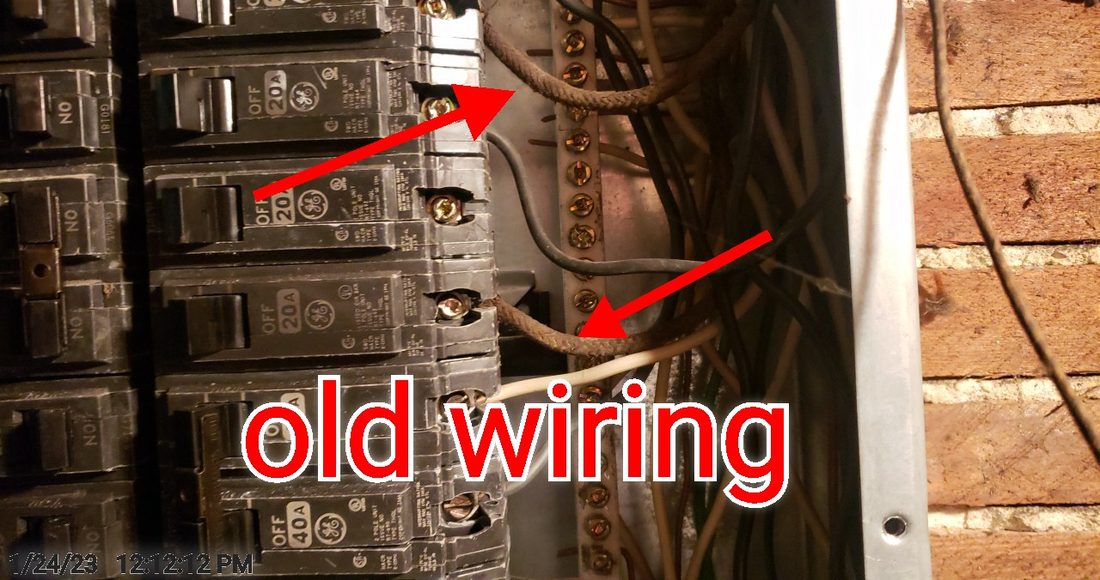
Original cloth-insulated wiring in the electrical panel
Finding 04 · Electrical

An electrical system that needed a full rewire

What it is

The wiring was a mix of the home's original circuits and amateur "handyman" work: splices made outside junction boxes under the kitchen, painted-over and two-prong ungrounded outlets, no GFCI protection anywhere, and no system ground that could be located. The service entrance wire was even left exposed on the exterior wall.

Why it matters

This is real shock and fire risk, not a code technicality — and insurers often won't write a policy on a house in this condition. There's no patching it safely; the system needed to be rewired end to end.

Ballpark: $20,000 – $25,000
Illustrative range — complete rewire of the entire house with a new grounded service and GFCI protection, by a licensed electrician. Not a quote.
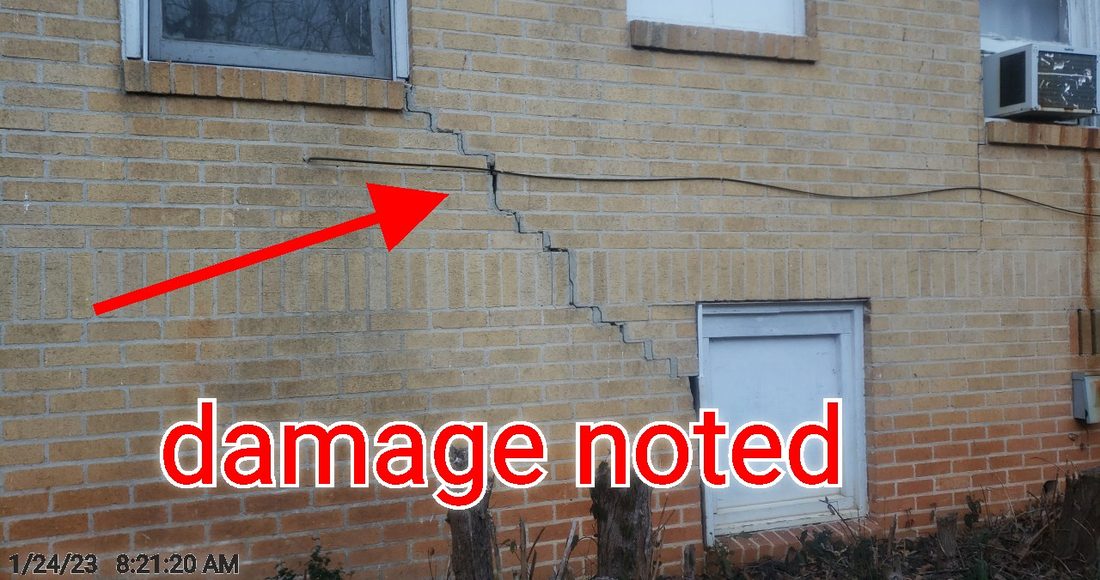
A stair-step settlement crack running through the exterior brick wall
Finding 05 · Structure

Structural cracking in the exterior and foundation walls

What it is

The report documented settlement cracking in both the exterior walls and the foundation walls, tied to leaning brick support piers and failing foundation footings beneath the house. In plain terms, the supports keeping the house level are moving.

Why it matters

This goes beyond what a home inspection scopes on its own — it needs a structural engineer to evaluate the footings and piers and specify the repair. Movement like this doesn't correct itself, and it's directly tied to the water being aimed at the foundation (the final finding below).

Ballpark: $5,000 – $25,000
Illustrative range — structural engineer's evaluation, then footing and pier repair with crack stabilization. Not a quote.
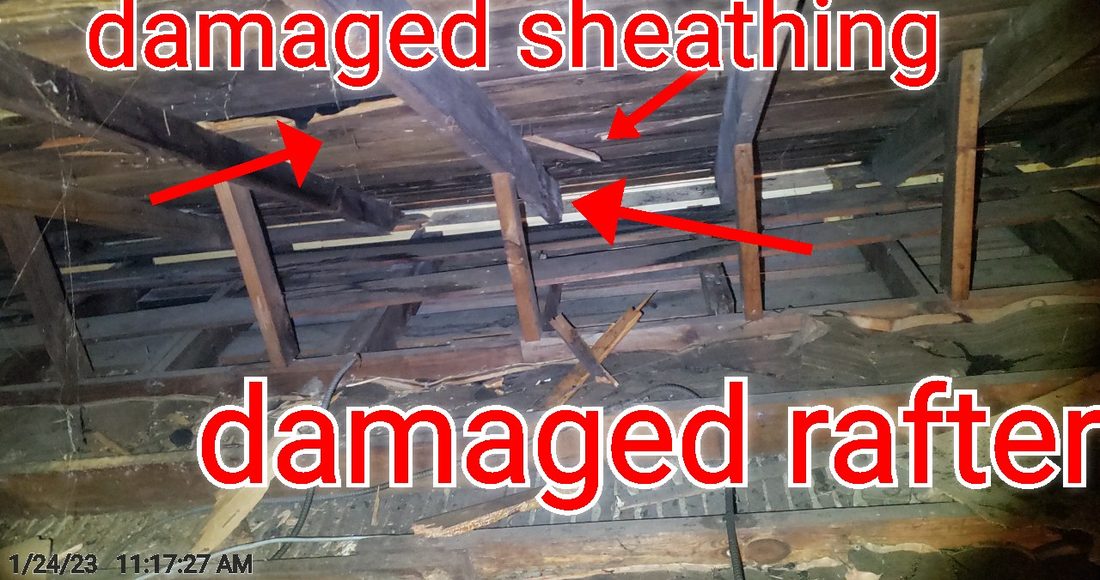
Damaged roof sheathing and a damaged rafter in the attic
Finding 06 · Roof

A roof structure never built for a modern roof — and already leaking

What it is

The roof framing was original and undersized for today's heavier roofing: undersized rafters, unsupported purlins, no ridge board, and decking that wasn't secured. There were damaged rafters, active water staining in the attic, advanced shingle age with the felt showing through, rodents in the attic — and no gutters on the house at all.

Why it matters

The roof and the structure under it were failing together, and with no gutters, every storm was pushing water straight down to the foundation problem below. A new roof here means reinforcing the framing first, not just laying shingles.

Ballpark: $15,000 – $35,000+
Illustrative range — reinforce the roof framing, re-roof, and add gutters and downspouts. Not a quote.
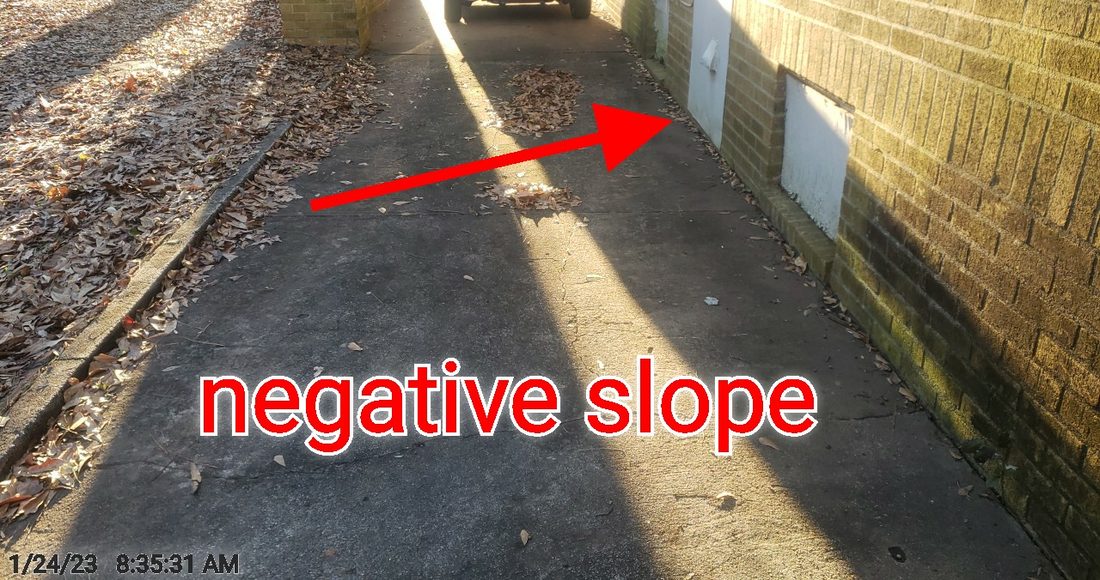
Driveway sloping back toward the house against the foundation (negative grade)
Finding 07 · Water Management

The root cause: water aimed straight at the foundation

What it is

The ground sloped toward the foundation on three sides of the house, there were no gutters to carry roof water away, and the porches were separating from the structure where water had undermined them.

Why it matters

This is the engine behind almost everything above — the rotted beam, the foundation cracks, the crawlspace mold. Fix it last and you've fixed nothing; fix it first and you stop the water that's driving the rest. It's also the cheapest problem on this page, which is why catching it early matters so much.

Ballpark: $4,000 – $12,000
Illustrative range — regrade for positive drainage, add gutters and downspouts, and repair the porch supports. Not a quote.

And those are only the structural findings — the report also flagged the life-safety items a walk-through never catches: no smoke detectors anywhere in the home, bedroom windows painted shut, a missing water-heater relief line, and a damaged gas line in the attic.

The Outcome

What the inspection meant for our client

Our client used the report as leverage — and it was a strong hand to play. With 89 documented findings across every system in the house, including active structural failure and a full rewire, the true scope of the project was no longer a guess. They negotiated hard on the one thing that mattered most: the price. The seller agreed to a significant reduction that reflected what the house actually needed.

Then they did what the report made possible — they bought it with their eyes open and rehabbed the home from the roof to the foundation: new structure, a complete rewire, the works. The inspection didn't talk them out of the house; it told them exactly what they were buying and handed them the leverage to pay the right number for it. On a near-century-old home, that's the whole difference between a smart project and a money pit.

Buying an Older Home?

Find out what you're really buying.

A 1920s house can be a brilliant buy or a money pit — and from the curb, they look the same. Schedule an independent inspection and learn the true scope before you sign, not after.

Schedule Your Inspection