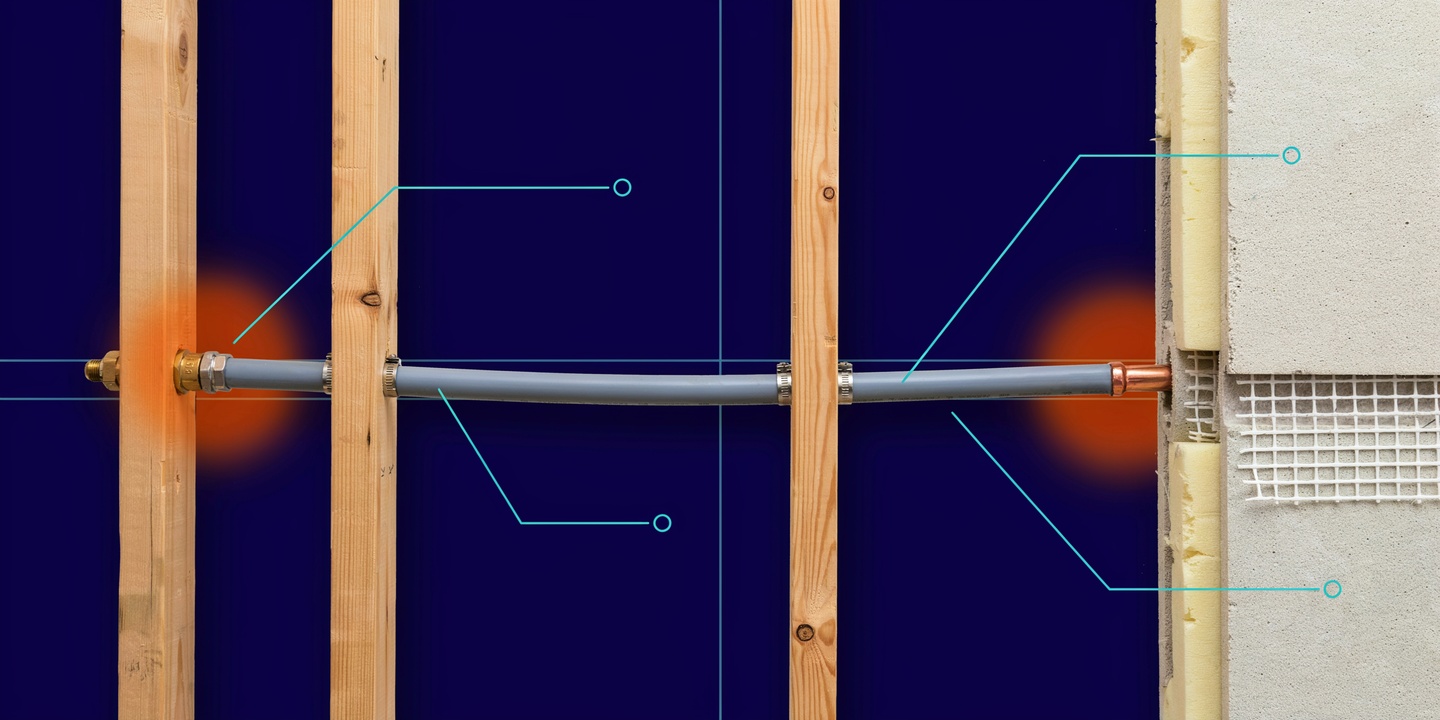
Polybutylene plumbing
Polybutylene is a gray (sometimes blue) plastic water-supply pipe used heavily from the late 1970s into the mid-1990s. The problem is that it degrades from the inside out and can fail without warning — and many insurers will decline coverage, or charge more, for a home that still has it. Most has been replaced across metro Atlanta, but we still find it in homes built in the late ’80s and early ’90s.
EIFS (synthetic stucco)
EIFS — Exterior Insulation and Finish System — is a synthetic stucco that was marketed as energy-efficient. When it’s installed without proper drainage details (which is common), it traps water behind the finish. The result is hidden wood rot, mold, and structural deterioration you can’t see from the curb until it’s significant.
Hardboard / composition siding
Masonite-style composition siding was common on 1990s homes — attractive and affordable when new. Over time it swells, warps, and rots, especially along the bottom course and around windows and doors where moisture collects.
Federal Pacific and Zinsco electrical panels
These electrical panels were installed widely from the 1950s into the 1980s. Both have documented histories of breakers that fail to trip under fault conditions — a genuine fire risk. Most inspectors and electricians recommend replacement regardless of whether the panel appears to be “working.” We walk through what we look for inside a panel in What’s Really Behind Your Electrical Panel Cover.
Defective roofing shingles (e.g., Atlas Chalet)
Certain laminated shingles — Atlas Chalet among the best known — were installed widely across the Southeast in the late 1990s and 2000s before being discontinued. They tend to crack and fail prematurely, and because they’re no longer manufactured they can’t be spot-repaired. Some insurers won’t cover a roof that still has them.
These cluster by era and area
Most of these products map to metro Atlanta’s late-1980s-through-1990s building boom, which is why we see them concentrated in cities like Lawrenceville and Duluth. A home’s age is a strong hint about which of these to look for — and it’s exactly the kind of pattern local inspections since 2002 make obvious.
Found one? Don’t panic.
Any single item on this list is a reason to investigate and negotiate — not necessarily to walk away. Knowing it’s there, what it will cost, and whether your insurer will cover it is exactly the leverage a thorough inspection gives you. All of these turn up in a standard home inspection.